

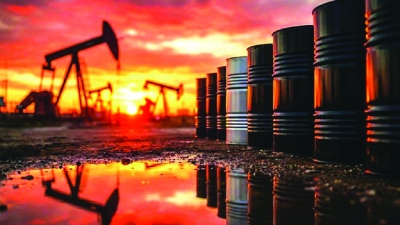
The international energy market is in a state of high alert as major economies have decided to release strategic oil reserves to curb skyrocketing prices. The International Energy Agency (IEA) is expected to announce a recommendation for a coordinated move, while countries such as Japan, Germany, and other European partners are already preparing to release portions of their strategic stockpiles into the market. This panic-driven move aims to stabilize markets and reduce pressure on consumers at a time when rising oil prices and geopolitical tensions threaten to trigger a new energy shock.
Japan’s reaction
Japan has already confirmed that it will begin releasing part of its strategic reserves as early as March 16. Prime Minister Sanae Takaichi stated that Tokyo intends to act even before the official IEA decision. The plan involves the release of oil quantities equivalent to approximately 15 days of private-sector reserves as well as about one month of state-owned reserves. At the same time, Germany is also preparing to release part of its own oil stocks, according to a report by the German news agency DPA, reinforcing expectations for a coordinated international effort to stabilize the market.
Market response
Following the announcements, the price of American West Texas Intermediate (WTI) oil reversed course. It is currently falling by 1.50%, trading around $84 per barrel. Beyond Germany and Japan, actions are being noted from other European governments as well. German Economy Minister Katherina Reiche convened a press conference in Berlin, one day after Finance Minister Lars Klingbeil stated that the government is open to the possibility of releasing part of the reserves. Almost simultaneously, the government of Austria announced it would limit price increases for diesel and gasoline at gas stations to once per day, while also participating in international plans for oil reserve releases. Furthermore, French Economy Minister Roland Lescure stated that the successive announcements "are undoubtedly part of a highly coordinated approach."
How much oil will be released
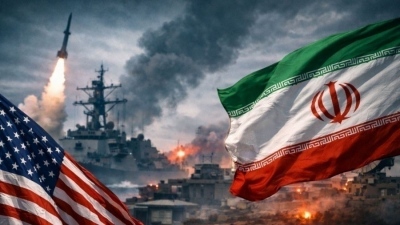
According to Reuters, the plan initially envisions the release of approximately 100 million barrels, as part of a broader program that could reach a total of 400 million barrels. Following Russia’s invasion of Ukraine in 2022, 183 million barrels were released from national reserves in two phases, in March and April of that year. Germany had released about 6.5 million barrels at that time. Oil prices have risen significantly following the attacks on Iran and the subsequent conflicts in the Persian Gulf region, with oil transport through the Strait of Hormuz being severely affected. Despite the rise, prices remain lower than the levels above $100 per barrel recorded earlier on Monday. The price hike has already been passed on to consumers, with fuel becoming more expensive at pumps in many countries worldwide.
Von der Leyen: Europe must not return to Russian energy
At the same time, the President of the European Commission, Ursula von der Leyen, continues her fixation on the European Union's decoupling from Russian oil and gas, even as the war in Iran causes severe pressure on global energy supplies. The European Union has already significantly reduced imports of Russian energy following the invasion of Ukraine in 2022 and plans a total ban on all energy imports from Moscow. However, the US-Israel war with Iran has caused turmoil in international markets, limiting oil and gas supplies and sending prices soaring. Europe is considered particularly vulnerable to an energy shock, while some member states maintaining friendlier ties with Russia, such as Hungary, have called for the lifting of European sanctions on Russian energy imports to address the supply crisis.
Russia threatens supply cutoff
Ursula von der Leyen’s remarks followed a statement by Russian President Vladimir Putin, who left open the possibility that Moscow might cut off energy supplies to Europe even before the European ban takes effect. "The government has already been instructed to evaluate the possibility and feasibility of stopping fuel supplies to the European market, without waiting for them to demonstratively close the door on us," Vladimir Putin stated on Monday. The Russian president added that the goal is to redirect these volumes to "more promising markets" and primarily to consolidate Russia's presence in them. According to European Union data, Europe has already significantly reduced its dependence on Russian energy. In 2025, imports of Russian natural gas—both LNG and via pipelines—accounted for about 13%, while Russian oil represented less than 3%. In 2021, these figures were approximately 45% and 27% respectively. In January, the Council of the European Union approved a regulation banning imports of Russian LNG and pipeline gas from March 18, with transition periods for existing contracts. By the end of 2027, all imports of Russian gas will be completely banned. However, data shows that in February, all LNG exports from the Yamal facility in the Arctic were directed to EU countries, highlighting how difficult a total ban may prove to be. Russian Deputy Prime Minister Alexander Novak stated that Russian companies will redirect part of the LNG currently supplied to Europe to other markets without waiting for the European ban. "Other markets are opening, and it might be more profitable for us to stop shipments to the European market now and head to markets that are opening and establish ourselves there," the Russian president stated on March 4.
Division in Europe
The impending ban on Russian gas imports comes at a particularly difficult juncture for Europe, as the war in Iran and restrictions on oil and gas exports from the Middle East intensify pressures on energy markets. Meanwhile, the EU is struggling to achieve full consensus on the issue of banning cheap Russian energy. States such as Hungary and Slovakia have opposed efforts to ban Russian supplies. These two countries continued to import Russian oil through the Druzhba pipeline and gas via relevant transmission lines passing through Ukraine. The Druzhba pipeline, however, has been out of operation after sustaining damage during the war. In late February, Hungary accused Ukraine of deliberately keeping the pipeline closed, effectively imposing an "oil blockade" on the country. The Ukrainian side responded that the shutdown is due to Russian attacks.
www.bankingnews.gr





Σχόλια αναγνωστών